
Information for an informed decision
Stamped Concrete
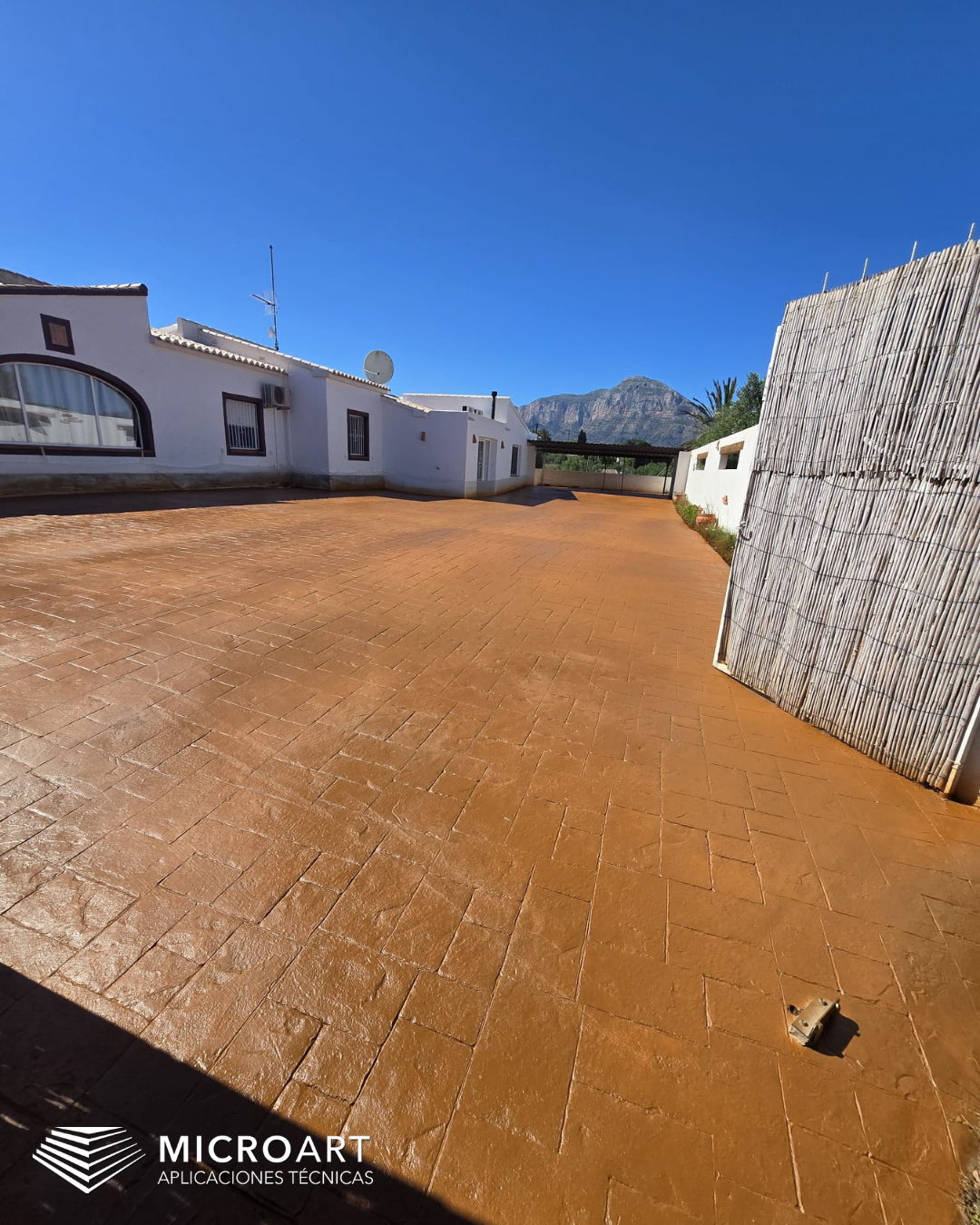
Concrete is a chameleon material that adapts to refined or brutalist architectures. It is made using special molds applied to fresh concrete in situ.
Stamped Concrete is specified as a complete system, not as a single visible finish. The condition of the substrate, intended use, exposure, drainage and required finish all influence the proposal.
Common applications
These are some of the uses we assess for Stamped Concrete. Every project is checked individually before confirming a system.
Our working process
- 01Review the space, substrate, use and access.
- 02Define preparation, compatible materials and the final finish.
- 03Protect surrounding areas and execute the specified system.
- 04Check details, curing time and handover conditions.
What it can offer
- Design flexibility with infinite colors and patterns
- Very competitive installation costs
- Quick execution without placing piece by piece
- High resistance to external agents
What must be assessed
- A finish cannot correct movement, moisture or a weak substrate by itself.
- Performance depends on the complete system and its execution.
- Use, cleaning and exterior exposure must be considered before choosing a finish.
Budget and technical visit
A reliable quote describes the preparation and complete system, not only a price per square metre.
- Surface, geometry and access
- Substrate condition and necessary repairs
- Use, exposure and required finish
- Protection, details and curing time
Real projects
Stamped Concrete gallery
Select an image to view it in detail.
Common questions
Frequently asked questions
How is a Stamped Concrete system selected?
We review the substrate, intended use, exposure, details and desired finish before defining a solution.
Can it be installed over an existing surface?
In many cases it can, provided the base is stable, sound and compatible with the selected system.
What affects the quote?
Square metres are only one factor. Preparation, repairs, geometry, access, protection, finish and curing conditions also matter.